GEOTECHNICAL ENGINEERING
REPENTIGNY
HomeGround improvementVibrocompaction design

Vibrocompaction Design in Repentigny: Deep Soil Improvement for Buildable Land

Technical studies that support your project.

LEARN MORE

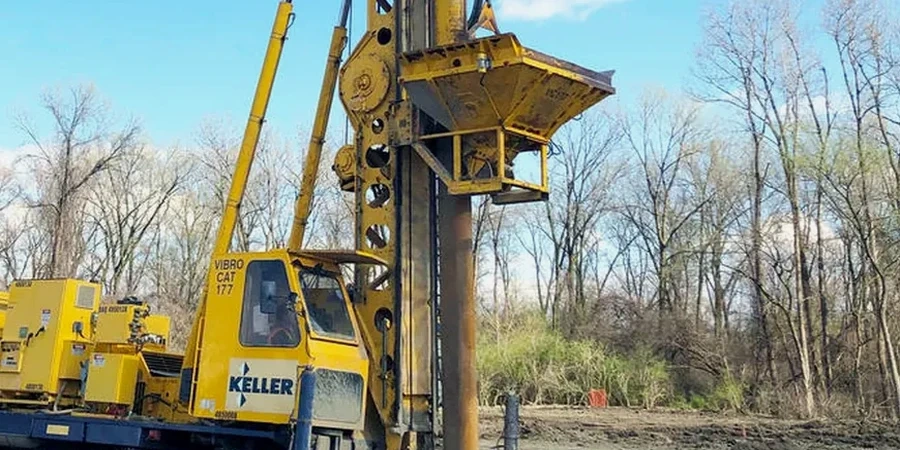
Repentigny’s growth from a 17th-century seigneurie into a major suburban center along the St. Lawrence River has pushed development into areas where native soils present real challenges. Much of the city sits on terraces of loose, water-bearing sands deposited by the retreating Champlain Sea, materials that are prone to settlement and liquefaction under load. Building on these deposits without ground improvement is a gamble that too many owners take. Our team approaches vibrocompaction design as a calculated engineering process, not a one-size-fits-all treatment. We start by mapping the granular matrix, evaluating relative density targets, and defining the vibration parameters that will produce a uniform, densified mass. The goal is simple: transform a problematic soil profile into a competent foundation medium without removing a single cubic meter of material.

You are not just densifying soil — you are programming a three-dimensional zone of engineered fill that will hold its properties for the life of the structure above it.
Our service areas

Our approach and scope

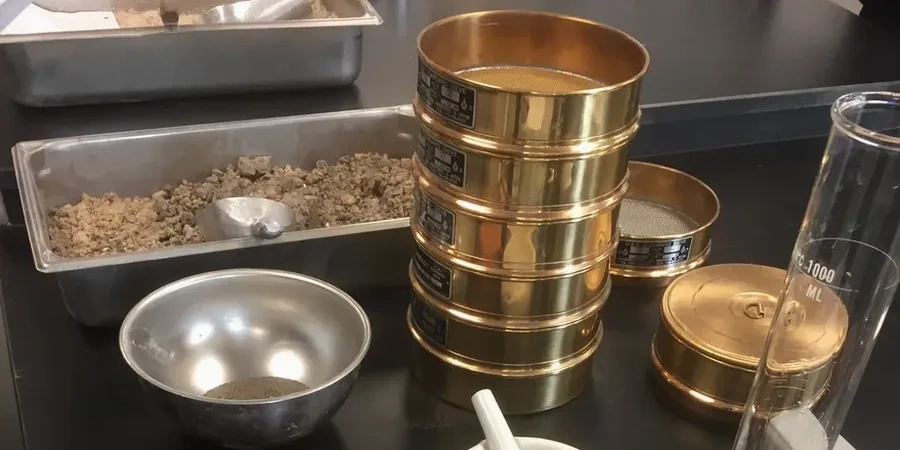
The superficial geology across much of Repentigny consists of fine to medium sands with silt lenses, a legacy of the post-glacial Lampsilis Sea that once covered the lowlands. In its natural state, this material often shows relative densities below 40 percent, which is well under the 70 percent threshold required for reliable performance under structural loads. Our vibrocompaction design process uses cone penetration test data from CPT testing to establish a baseline profile and identify zones where the sand matrix will respond to vibratory energy. We specify grid spacing, probe penetration depth, vibration frequency, and dwell time at each point based on the grain-size distribution and fines content. For the silty pockets encountered in the Le Gardeur sector, we adjust the approach with pre-wetting or supplementary jetting to prevent the damping effect that fines create. The result is a treatment plan that targets the specific stratigraphy of each lot, not a generic layout copied from another job.
Vibrocompaction Design in Repentigny: Deep Soil Improvement for Buildable Land
Technical reference — Repentigny

Local geotechnical context

The difference between a site near the Repentigny waterfront and one up on the higher terraces toward the agricultural plain is dramatic. Riverside lots often sit on loose hydraulically-placed fill over natural sand, a two-layer system that can settle unevenly and trap water against foundation walls. Inland properties may have a crust of desiccated clay over the sand, which looks firm during a summer site visit but softens quickly once excavation begins. Without proper vibrocompaction design, the loose sand mass can densify suddenly under cyclic loading — think of a heavy truck crossing the site repeatedly during construction, or a seismic event. The 2010 Val-des-Bois earthquake, though centered in Outaouais, was felt clearly in Repentigny and reminded everyone that the St. Lawrence lowlands are not immune to ground shaking. A well-executed vibrocompaction program reduces the chance of differential settlement and seismic-induced densification, two failure modes that are expensive to fix after the building is up.

Need a geotechnical assessment?

Reply within 24h.

Email: info@geotechnical-engineering.org

Relevant standards

NBCC 2020 — Division B, Part 4 for seismic design and foundation requirements, CSA A23.3:19 — Design of concrete structures with reference to ground improvement effects, ASTM D1586 — Standard Test Method for Standard Penetration Test (SPT) for correlation, ASTM D5778 — Standard Test Method for Electronic Friction Cone and Piezocone Penetration Testing, BNQ 2501-092 — Soils: determination of relative density (reference for QC)

Technical data

ParameterTypical value
Target relative density (Dr)70-85% depending on seismic demand category
Typical grid spacing1.5 to 3.0 m triangular pattern
Probe penetration depth range6 to 25 m below grade
Applicable soil typeClean to slightly silty sands (fines <12%)
Vibrator power class130-180 kW for medium to deep profiles
Post-treatment verification methodCPT or SPT with before/after comparison
Frequency range during compaction15-30 Hz depending on soil response

Questions and answers

What does vibrocompaction design cost for a typical Repentigny residential lot?

For a standard single-family residential parcel in Repentigny, the design package — including site investigation review, treatment grid layout, and verification protocol — typically falls between CA$2,050 and CA$4,100. Larger commercial or multi-unit sites requiring deeper treatment and more extensive testing generally range from CA$4,100 to CA$8,020, depending on the complexity of the soil profile and the number of verification points required.

How long does the design process take before the contractor can start?

Once we have the CPT or SPT data from the site, the design phase usually takes five to eight business days. This includes the analysis of pre-treatment conditions, grid layout, parameter selection, and preparation of the QA/QC plan. If additional site investigation is needed because existing data is sparse, that adds time for field work.

Can vibrocompaction work if the soil has silt layers mixed in?

It depends on the fines content and the continuity of the silt layers. Sands with less than 10 to 12 percent fines respond well. Thicker, continuous silt seams act as vibration dampers and can prevent effective compaction. In those cases we evaluate whether supplementary techniques — like pre-drilling through the silt or adding water jets — can achieve the required density, or whether an alternative method like stone columns would be more reliable.

How do you verify that the compaction actually worked?

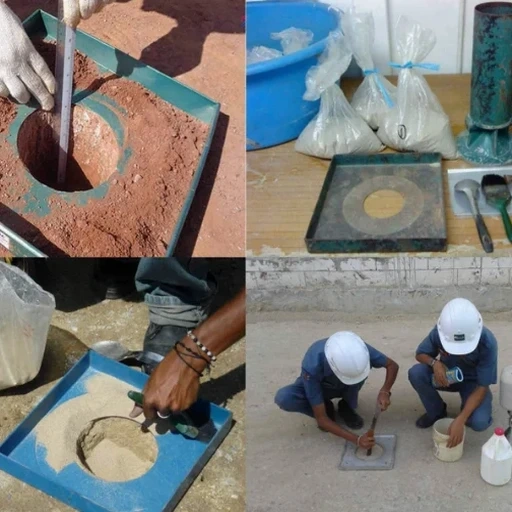
We specify a before-and-after testing protocol using CPT or SPT soundings at the same locations. The post-treatment test results are compared directly to the pre-treatment baseline. We look for a consistent increase in tip resistance and sleeve friction that corresponds to the target relative density. Acceptance criteria are defined in the design document before any compaction starts.

Is vibrocompaction noisy and disruptive for neighboring properties?

The vibrator does produce ground-borne vibration and audible noise during operation. In Repentigny's residential zones, we include vibration monitoring and setback distances in the design to keep peak particle velocities within municipal and NBCC guidelines. The treatment is relatively fast — a typical residential lot can be completed in one to two days — so the disturbance is short-lived.

Location and service area

We serve projects in Repentigny and surrounding areas. More info.

View larger map