GEOTECHNICAL ENGINEERING
REPENTIGNY
HomeSeismicSoil liquefaction analysis

Soil Liquefaction Analysis for Repentigny Construction Projects

Technical studies that support your project.

LEARN MORE

The 2020 edition of the National Building Code of Canada (NBCC) mandates a rigorous seismic site classification, and in Repentigny, this requirement carries significant weight. Lying at 45.73°N along the north shore of the St. Lawrence River, the area's post-glacial sedimentary deposits, including the fine sands of the L'Assomption River delta, present a textbook environment where pore pressure buildup during a seismic event can trigger a sudden loss of soil strength. Our laboratory team approaches every liquefaction evaluation by first understanding the stratigraphy beneath the site, because the cyclic resistance of these local sands varies dramatically with density and fines content. For deeper profiling on river-adjacent lots, we often run the CPT test to gather continuous tip resistance and sleeve friction data, which feeds directly into the deterministic analysis without the disturbance inherent in traditional sampling methods.

Repentigny's deltaic sands can lose over 60% of their bearing capacity within seconds, well before a visible sand boil appears at the surface.
Our service areas

Our approach and scope

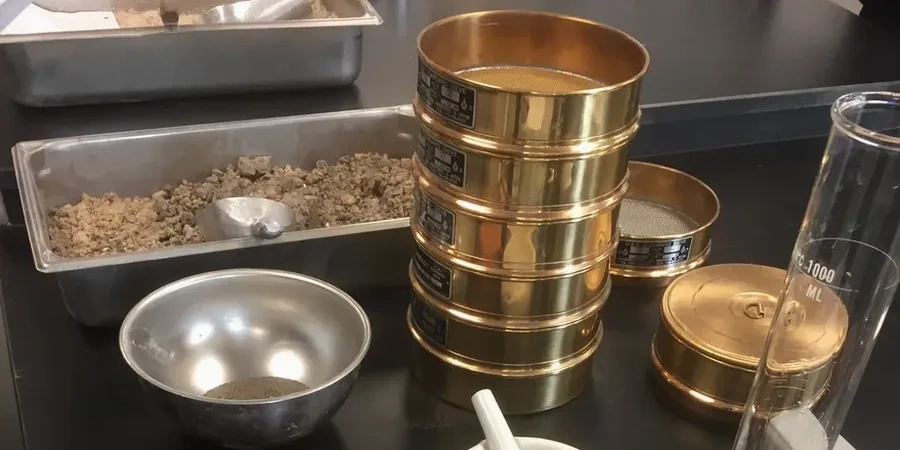
The contrast between Repentigny's densely built urban core and its lower-lying zones near Rivière des Prairies creates two distinct liquefaction hazard scenarios that technicians must distinguish. Where the surficial geology shifts from glacial till to the Champlain Sea clays and overlying sandy lenses, we observe that cyclic stress ratios computed from the site-specific ground motion model differ substantially from the default NBCC values. In these transitional deposits, we combine the standard SPT-based procedure with a MASW survey to verify the shear wave velocity profile, ensuring the Vs30 classification isn't skewed by a shallow stiff layer that masks weaker material at depth. Our sample preparation for cyclic triaxial testing on undisturbed specimens from these sandy layers follows the strictest protocols, because even a six percent deviation in initial relative density can shift the factor of safety below the critical threshold of 1.0 that governs mitigation decisions.
Soil Liquefaction Analysis for Repentigny Construction Projects
Technical reference — Repentigny

Local geotechnical context

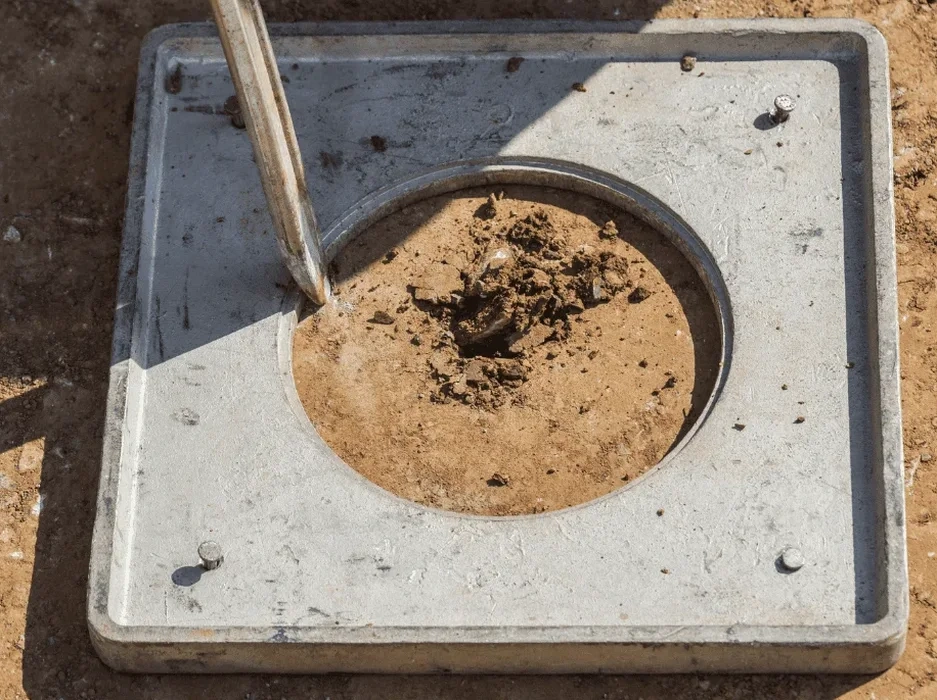
A recurring observation in Repentigny's older neighborhoods is the presence of backfilled former creek beds where the historical hydrography has been erased from modern maps but not from the soil memory. These hidden channels, filled with loose, saturated sand of unverified provenance, represent a liquefaction risk that a simple site visit cannot detect because the surface often looks identical to adjacent competent ground. When we run the index properties on samples from these fills, we frequently find a plasticity index near zero and a gradation that falls squarely within the Tsuchida boundaries for maximum contractive potential. The consequence isn't just settlement on the order of 15 to 25 centimeters, but a lateral spread toward the former watercourse that can shear driven piles and tear apart grade beams. The mitigation strategy must then shift from a standard densification approach to a structural solution, which is why we integrate these findings with a stone columns design that provides both drainage and reinforcement through the suspect layer.

Need a geotechnical assessment?

Reply within 24h.

Email: info@geotechnical-engineering.org

Relevant standards

NBCC 2020 (National Building Code of Canada, Seismic Hazard Provisions), CSA A23.3:2019 (Design of Concrete Structures, Seismic Requirements), ASTM D5311/D5311M-13 (Cyclic Triaxial for Liquefaction), ASTM D6066-11 (Assessing Triggering via SPT)

Technical data

ParameterTypical value
Seismic Hazard (Sa 0.2s)0.59g per NBCC 2020 for Repentigny coordinates
Minimum Factor of Safety (FS)1.0 for static shear; 1.1 for post-liquefaction stability
Analysis Depth Range0-25 m below existing grade depending on strata
Standard Penetration Test (SPT) Energy RatioCalibrated to 60% theoretical (N1)60cs
Fines Content DeterminationWash-sieve per ASTM D1140 on each distinct layer
Cyclic Triaxial Frequency0.1 Hz to simulate M6.5-M7.5 event duration
Post-Liquefaction SettlementEstimated via Tokimatsu & Seed (1987) integration

Questions and answers

At what depth is liquefaction a concern in Repentigny and how deep should the investigation go?

The critical zone typically extends from the groundwater table, which in Repentigny often sits within 1.5 to 3.0 meters of the surface near the river corridors, down to about 20 meters. Our standard scope probes to 25 meters to capture the full Champlain Sea sediment package, because a cleaner sand lens at 18 meters can still produce significant settlement at the foundation level even if the upper 10 meters are predominantly silty clay.

How much does a soil liquefaction analysis cost for a typical lot in Repentigny?

For a standard residential or light commercial lot requiring one borehole with SPT sampling, laboratory index testing, and the engineering analysis report, the cost ranges between CA$3,580 and CA$5,740. The final quote depends on the number of test intervals, whether undisturbed Shelby tube samples are needed for cyclic triaxial testing, and the complexity of the ground response modeling the site stratigraphy demands.

Does the presence of clay layers in Repentigny eliminate the need for liquefaction analysis?

Not necessarily. While the stiff Champlain Sea clays themselves are not susceptible to liquefaction, their stratigraphic position often sandwiches loose sand and silt seams that are. We have encountered multiple sites where a continuous clay crust of 4 meters overlies a 3-meter-thick liquefiable sand layer, a configuration that can still cause foundation damage through differential settlement. The analysis must therefore include a detailed layer-by-layer screening based on the Atterberg limits and grain size distribution, not just a blanket assumption.

Location and service area

We serve projects in Repentigny and surrounding areas.

View larger map