GEOTECHNICAL ENGINEERING
REPENTIGNY
HomeSlopes & WallsSlope stability analysis

Slope Stability Analysis in Repentigny: Geotechnical Risk on Clay Terraces

Technical studies that support your project.

LEARN MORE

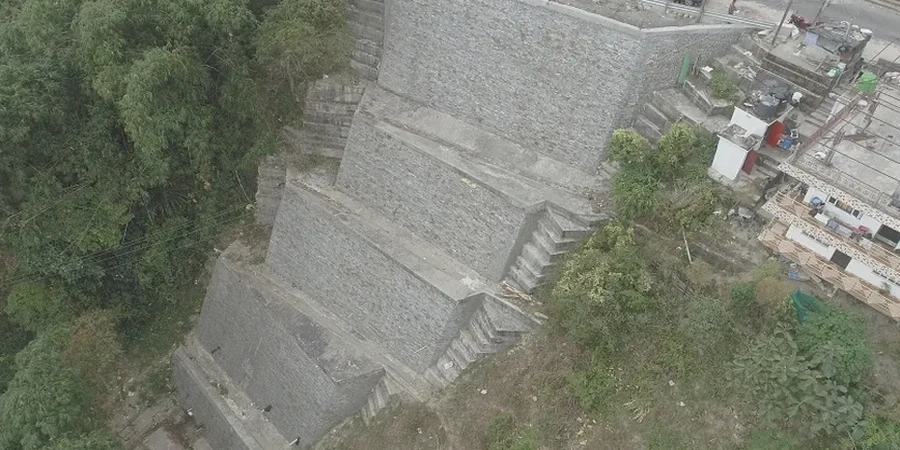
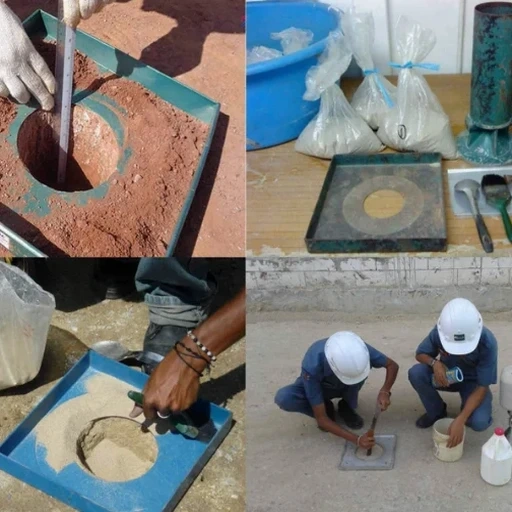
Last spring we were called to a site off Rue Notre-Dame where a contractor had opened a 4.5-meter cut for a triplex foundation. The slope face stood near-vertical for three days before a rain event triggered a shallow failure that took out the south formwork. Repentigny’s residential expansion pushes deeper into the terraces flanking the L'Assomption River, and those cuts expose the sensitive silty clay that defines the Champlain Sea deposit. A proper slope stability analysis before excavation would have identified the critical height and the required bench width. Our approach integrates in-situ permeability testing to quantify pore pressure buildup during the spring thaw, because that is what turns a stable winter cut into a mid-April slide. When the stratigraphy suggests interbedded sand lenses, we also run CPT soundings to map drainage paths that concentrate seepage at the toe.

A factor of safety of 1.3 means nothing if the pore pressure input comes from a textbook instead of a piezometer reading in April.
Our service areas

Our approach and scope

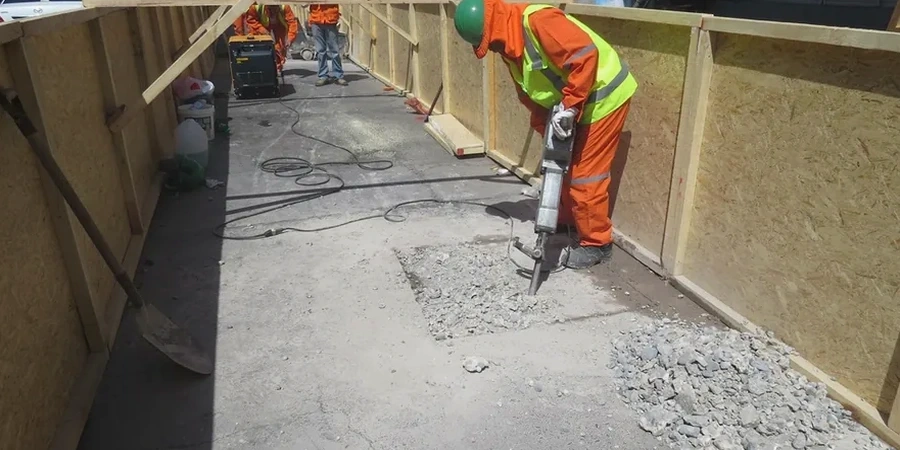
The field kit we mobilize for Repentigny assignments starts with a tracked drill rig capable of pushing Shelby tubes through the upper crust into the intact clay below. Undisturbed sampling matters here because the Champlain clay loses 60 to 80 percent of its undrained shear strength on remolding. We run consolidated-undrained triaxial tests on specimens trimmed at the lab, measuring effective stress parameters that feed a SLOPE/W or PLAXIS model built on the actual topography surveyed with total station. The output is not just a factor of safety; we deliver a staged excavation sequence with bench widths, dewatering schedules, and a monitoring trigger list. For embankments on the soft organic silt found near the river mouth, we often combine the stability model with stone column improvement to boost the composite shear strength before placing fill.
Slope Stability Analysis in Repentigny: Geotechnical Risk on Clay Terraces
Technical reference — Repentigny

Local geotechnical context

Repentigny sits on a Quaternary stratigraphy that catches out anyone used to working in glacial till. The Champlain Sea clay here has a liquidity index above 1.2 in the upper three meters, meaning it behaves like a viscous fluid when disturbed. We have seen 2:1 slopes fail because the contractor benched correctly in September but left the face exposed through freeze-thaw cycles without a berm drain. The real hazard is progressive failure: a small toe erosion from spring runoff removes passive resistance, and the crack propagates upward through a desiccated crust that looks competent but carries tension. A single-family home at the crest can lose its footing without a global circular failure ever developing. That is why our reports always include a seasonal stability envelope, comparing the drained summer condition against the worst-case spring pore pressure scenario, and why we specify a minimum setback from the crest that accounts for the tension crack depth measured in the field.

Need a geotechnical assessment?

Reply within 24h.

Email: info@geotechnical-engineering.org

Relevant standards

NBCC 2020 – Division B, Section 4.2 (Loads and geotechnical design), CSA A23.3:19 – Design of concrete structures (anchors and retaining elements), ASTM D7181 – Consolidated undrained triaxial compression test for cohesive soils, ASTM D2573 – Field vane shear test in cohesive soil, CFEM (Canadian Foundation Engineering Manual) 4th Edition – Slope stability chapters

Technical data

ParameterTypical value
Analysis methodLimit equilibrium (Morgenstern-Price / Spencer) and finite element (SSR)
Shear strength inputEffective stress (c', φ') from CIU triaxial; total stress (Su) from field vane
Pore pressure modelSteady-state seepage calibrated to monitored piezometric levels
Seismic coefficient (kh)Per NBCC 2020 seismic hazard for Repentigny (45.73°N, 73.45°W)
Critical slip surface searchEntry-and-exit grid with optimization (1,000+ trial surfaces)
Stabilization analysisSoil nails, tieback anchors, berms, or reinforced slopes per CSA A23.3
DeliverableSigned and stamped report with cross-sections, input echo tables, and construction sequence

Questions and answers

What slope geometry triggers a mandatory stability analysis in Repentigny?

The Régie du bâtiment du Québec typically requires a signed geotechnical report for any permanent cut or fill slope steeper than 2H:1V and exceeding 3 meters in height. In the Champlain clay zones that cover most of Repentigny, we recommend an analysis for any excavation deeper than 2.5 meters or any slope supporting a structure within a distance equal to twice the slope height from the crest.

How much does a slope stability analysis cost for a residential lot?

For a single-family residential excavation in Repentigny, the analysis typically ranges from CA$1,560 to CA$4,980 depending on whether undisturbed sampling and triaxial testing are required, or if we can use field vane data combined with existing regional correlations. A multi-storey commercial project requiring finite element modeling and seismic analysis will be at the upper end of that range.

What soil parameters do you use for the Champlain Sea clay?

We never rely solely on published correlations. Our standard program for Repentigny sites includes consolidated-undrained triaxial tests with pore pressure measurement to establish the effective stress envelope (c' and φ'), plus field vane tests to determine the undrained shear strength profile. The remolded strength is also measured because it controls the post-failure behavior and the selection of a residual factor for progressive failure analysis.

How long does the analysis and reporting take?

A standard slope stability analysis with site investigation, laboratory testing, and reporting takes two to three weeks from mobilization to the stamped report. If the site is accessible and we can use existing borehole data from neighboring lots, the timeline can shrink to ten business days. Complex stabilization designs involving anchored walls or reinforced slopes may extend to four weeks due to the iterative nature of the structural-geotechnical interface design.

Location and service area

We serve projects in Repentigny and surrounding areas.

View larger map