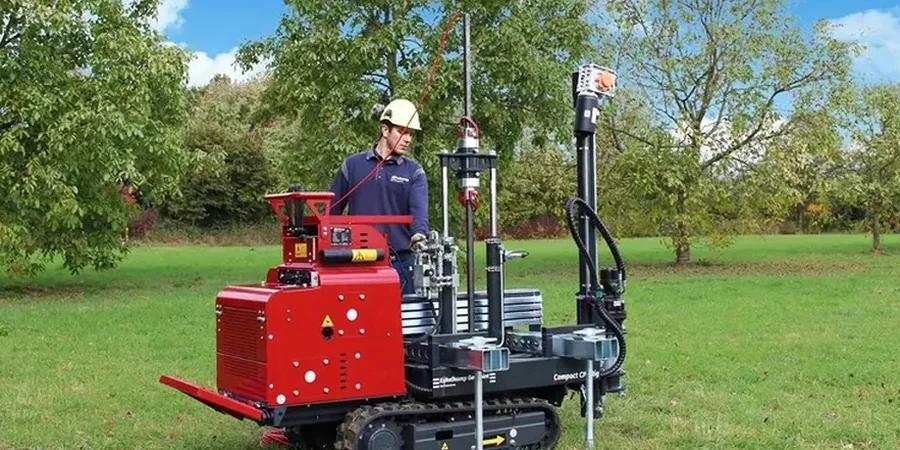
More than a few contractors working along the L'Assomption River have made the same mistake: relying on sparse borehole data and then hitting a compressible clay lens that delays the entire project. Repentigny sits on the Champlain Sea clays that define the St. Lawrence lowlands — a deposit that can vary from stiff silty crust to sensitive soft clay within a few metres. A CPT test eliminates that blind spot by delivering a continuous vertical profile of soil behaviour, measured every centimetre. The cone registers tip resistance, sleeve friction, and pore pressure simultaneously, so our team can map the exact depth of the desiccated crust, identify thin sand stringers that act as drainage paths, and flag zones where remoulded strength drops below design assumptions. For builders breaking ground near Boulevard Brien or expanding into the newer residential pockets east of Autoroute 40, this single day of testing often saves weeks of redesign later.
A CPT trace in Repentigny's Champlain clay reveals more about your foundation conditions in one afternoon than a conventional borehole log does in two weeks.