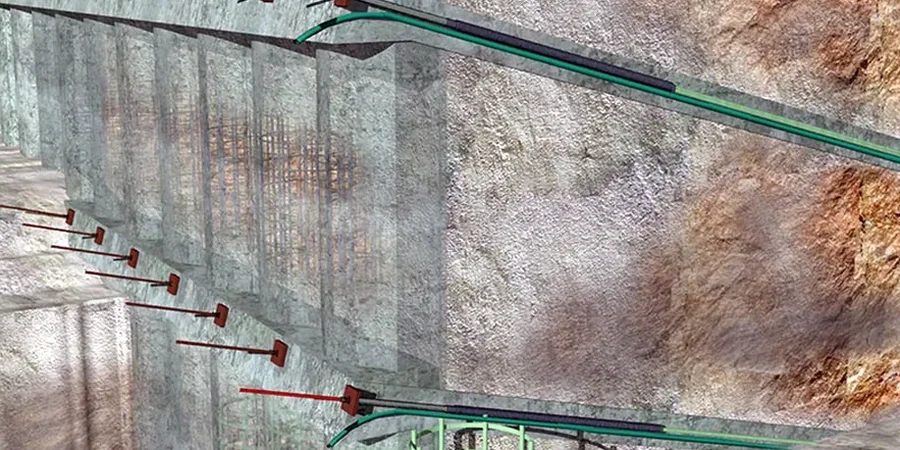
In Repentigny, the challenges of anchoring into Champlain Sea clays are something the local engineering community deals with daily. These sensitive silty clays lose strength fast when disturbed, so the difference between an anchor holding at 120 kN or creeping at 80 kN often comes down to how the bond length was calculated. We run full-scale pull-out tests on sacrificial anchors before production starts, measuring displacement to 0.01 mm at each load increment. When a project sits near the L'Assomption River or the Mascouche fault zone, we also check for slickensided clay surfaces that reduce skin friction by half compared to intact samples. For deeper tiebacks in till, combining our design with a CPT investigation gives us continuous tip resistance and sleeve friction profiles without the sample disturbance that makes lab testing of these dense tills so tricky — and that data feeds directly into the grout-to-ground bond estimates we rely on for the final submittal to the municipality.
In Repentigny's Champlain Sea clay, anchor bond stress values can drop 40% if installation disturbs the soil structure — a sacrificial test anchor is cheap insurance.