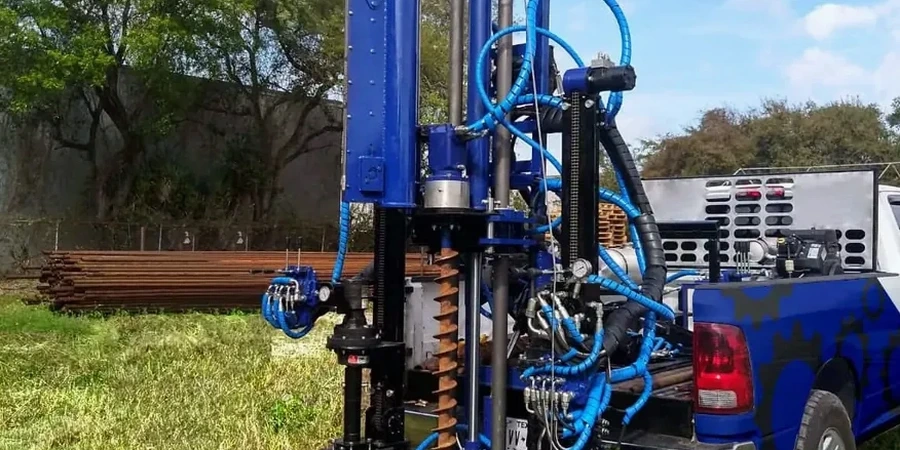
Repentigny sits at roughly 10 meters above sea level on the north shore of the St. Lawrence River—right where the L'Assomption River meets the main channel. That low elevation means groundwater is often just 1.5 to 2.5 meters below grade. For any structure heavier than a single-family home, the SPT (Standard Penetration Test) becomes the first quantitative checkpoint. We run the split-spoon sampler with a 63.5 kg hammer dropping 760 mm, recording blow counts every 150 mm of penetration. The N-value we obtain feeds directly into bearing capacity equations under NBCC and CSA A23.3. In Repentigny’s Champlain Sea clay deposits, ignoring SPT data leads to differential settlement that shows up within five years. Our lab processes the samples the same day—grain size and Atterberg limits run in parallel with the field log—so the geotechnical report moves at the speed the contractor needs.
N-values below 4 in Repentigny's Champlain clay demand immediate attention—that's the threshold where bearing capacity drops below 75 kPa and deep foundations become the default solution.