GEOTECHNICAL ENGINEERING
REPENTIGNY
HomeSeismicBase isolation seismic design

Base Isolation Seismic Design in Repentigny: Practical Ground-Truth for Structural Engineers

Technical studies that support your project.

LEARN MORE

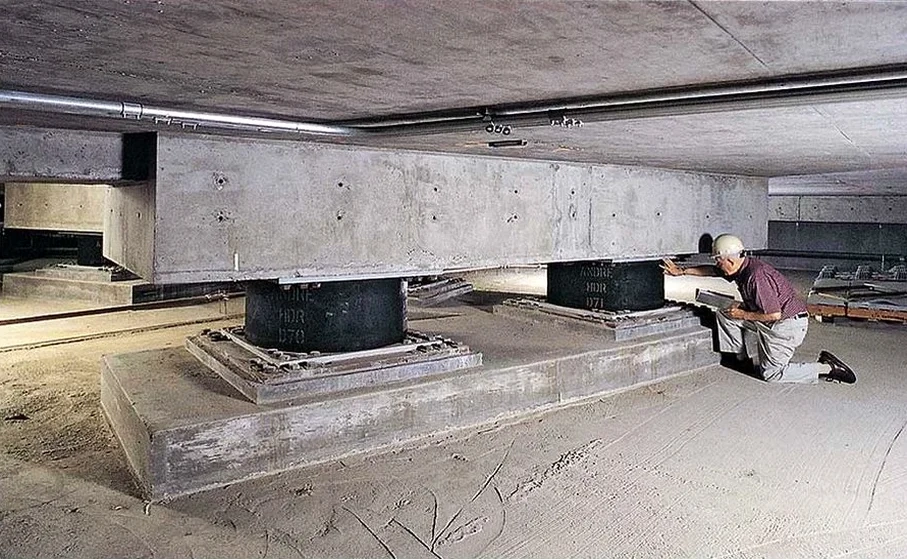
One mistake we see repeatedly in Repentigny is specifying an isolation system based solely on structural dynamics, without reconciling it against what the ground actually does during a design-level event. Repentigny sits on the north shore of the St. Lawrence, underlain by sensitive Champlain Sea clay that amplifies motion and loses strength under cyclic loading. An isolator that works beautifully on paper can underperform—or become a liability—if the site response analysis ignores the quick clay potential mapped across the lower L'Assomption River terraces. We close that gap. Our team runs site-specific ground response using shear-wave velocity profiles measured in Repentigny, then feeds those spectra directly into the bearing design. The result is an isolation interface that is tuned to the soil column beneath the building, not a generic code spectrum. For sites near the Rivière des Prairies or on the deeper clay pockets south of Boulevard Brien, we often couple the isolation design with a liquefaction assessment to ensure the entire ground-to-structure chain holds.

A base isolation period that ignores Repentigny's clay amplification at 0.8–1.2 seconds can shift the structure into a resonance window—site-specific spectra are non-negotiable here.
Our service areas

Our approach and scope

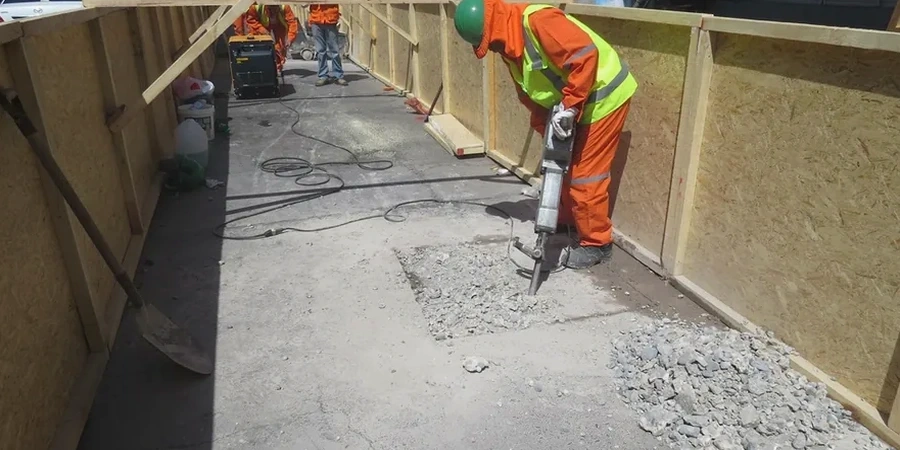
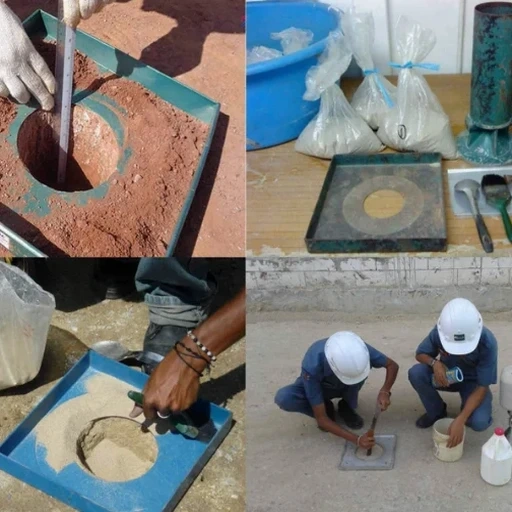
The physical characterization starts with a CPTu rig deployed on compacted working platforms right on Repentigny lots—sometimes between existing houses in the older sectors near Rue Notre-Dame. The cone measures tip resistance, sleeve friction, and pore pressure every two centimeters, giving us a near-continuous log of the Champlain clay crust, the underlying silty transition, and the glacial till contact. That profile feeds directly into our nonlinear site response model. We then extract thin-wall Shelby tube samples at the target isolation plane depth, which is typically within the stiff upper clay crust or on compacted granular pads placed over the marine clay. The lab program includes cyclic simple shear on undisturbed specimens to capture modulus degradation and damping curves at strains relevant to the isolation period. When the site is tight-access, we complement the CPT with MASW surface-wave surveys run along the property line to extend the Vs profile beyond the borehole depth—critical in Repentigny where the bedrock can slope sharply toward the river and create lateral stiffness contrasts that affect isolator performance.
Base Isolation Seismic Design in Repentigny: Practical Ground-Truth for Structural Engineers
Technical reference — Repentigny

Local geotechnical context

Repentigny's population has grown past 86,000, and much of the post-1970s building stock predates modern seismic detailing. The 2010 Val-des-Bois earthquake—a moderate M5.0 centered roughly 60 km north—sent sharp 2 Hz shaking through the region's clay basins and cracked unreinforced masonry in several older Lanaudière buildings. That event reminded engineers that moderate crustal earthquakes in the Western Quebec Seismic Zone can produce damaging short-period energy that couples efficiently with stiff soils. A base-isolated building on Champlain clay faces a dual hazard: the short-period pulse can excite the superstructure if the isolation gap closes, while the longer basin-induced surface waves can drive large isolator displacements. Our design approach explicitly checks both ends of the spectrum. We model the moat wall impact velocity and the restoring force capacity at maximum displacement, using ground motions scaled to the NBCC uniform hazard spectrum for Repentigny. When the soil class is E—which covers most of the city—the code-mandated site coefficient F_a can push spectral accelerations 30–40 % above the rock reference, making the isolation system displacement demand significantly larger than a Class C site would suggest.

Need a geotechnical assessment?

Reply within 24h.

Email: info@geotechnical-engineering.org

Relevant standards

NBCC 2020 – National Building Code of Canada, seismic provisions (Part 4, Division B), CSA A23.3:2019 – Design of concrete structures, Annex N: base isolation provisions, ASTM D7400 / D7400M – Standard test methods for downhole seismic testing, CAN/CSA-S6:19 – Canadian Highway Bridge Design Code, Section 4: seismic design (where applicable to bridge isolation)

Technical data

ParameterTypical value
Design reference period (NBCC 2020)2,475 years (post-disaster) or 975 years (normal importance)
Isolation plane locationAbove-grade on stiffened transfer slab, or below-grade in a perimeter moat
Target isolation period (T_iso)2.5 – 3.5 s, verified against site-specific spectra
Damping ratio (effective at MCE_R)15 – 30 % (LRB) or 5 – 10 % (FPS), confirmed by prototype testing
Maximum considered earthquake (MCE_R) PGA0.35 – 0.45 g (Repentigny zone, adjusted for soil class E)
Residual displacement check≤ 50 mm after MCE_R, per CSA A23.3 Annex N
Moisture content at bearing depth (clay crust)35 – 55 %, with liquidity index < 1.0 required

Questions and answers

What does a base isolation design package cost for a typical mid-rise building in Repentigny?

For a 3- to 6-storey building on a standard Repentigny lot, the engineering package—including site-specific hazard analysis, isolator specification, and the design report—generally falls between CA$6,250 and CA$10,410, depending on the number of ground motions analyzed and the complexity of the peer review scope.

How is the NBCC 2020 site class determined for a Repentigny property?

We measure the average shear-wave velocity in the upper 30 m (Vs30) using downhole seismic or MASW, and also check the undrained shear strength of the upper clay. Most of Repentigny falls into Site Class D or E because of the Champlain Sea clay. If the clay thickness exceeds 30 m with Vs below 180 m/s, Class E applies, which increases the design spectral accelerations significantly.

Do you test the actual isolators before they go into the building?

Yes. We specify a prototype test program where two full-scale isolators are subjected to the design displacement cycles and aging effects per CSA A23.3 Annex N. We attend the testing at the manufacturer's facility, review the hysteresis loops, and confirm that the effective stiffness and damping fall within the acceptance margins before production bearings are fabricated.

Can an existing building in Repentigny be retrofitted with base isolation?

It is possible but demanding. The building must be temporarily supported while the isolation plane is cut and the bearings are inserted. For Repentigny's older concrete-frame structures on Champlain clay, the challenge is often the foundation itself—whether it can transfer the concentrated isolator loads without excessive settlement. A detailed geotechnical and structural assessment determines feasibility.

Location and service area

We serve projects in Repentigny and surrounding areas.

View larger map