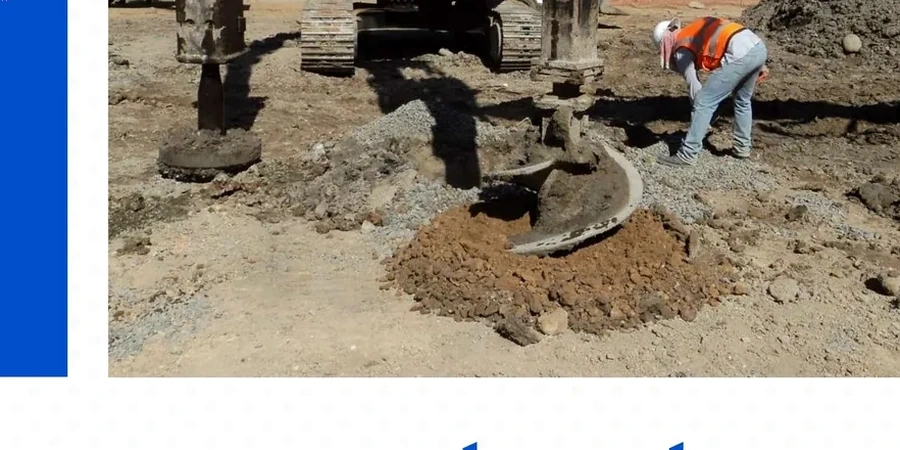
Repentigny’s built landscape tells a quiet story about its soils. North of the Autoroute 40, near the L’Assomption River, you often find dense glacial till that handles loads without much fuss. Cross south toward the older parts of town, close to Rue Notre-Dame, and the profile shifts dramatically—thick layers of soft clay and silt deposited by the Saint Lawrence lowlands. That contrast shapes how we approach foundation design here. When soil bearing capacity drops below what a structure demands, we don’t just dig deeper. A vibrocompaction program may work for granular fills, but when the challenge is a deep, saturated clay layer, the discussion turns to stone column design. The technique replaces roughly 15 to 35 percent of the weak soil with compacted gravel, creating a composite mass that drains excess pore pressure and stiffens the ground. With Repentigny’s population now exceeding 86,000, infill projects and multi-unit residential blocks are increasingly common on these marginal soils, making reliable ground improvement a practical necessity rather than an afterthought.
In Repentigny's southern lowlands, stone columns transform compressible clay into a composite ground mass that drains, stiffens, and supports—without over-excavation.