GEOTECHNICAL ENGINEERING
REPENTIGNY

Geotechnical Engineering in Repentigny

Technical studies that support your project.

LEARN MORE

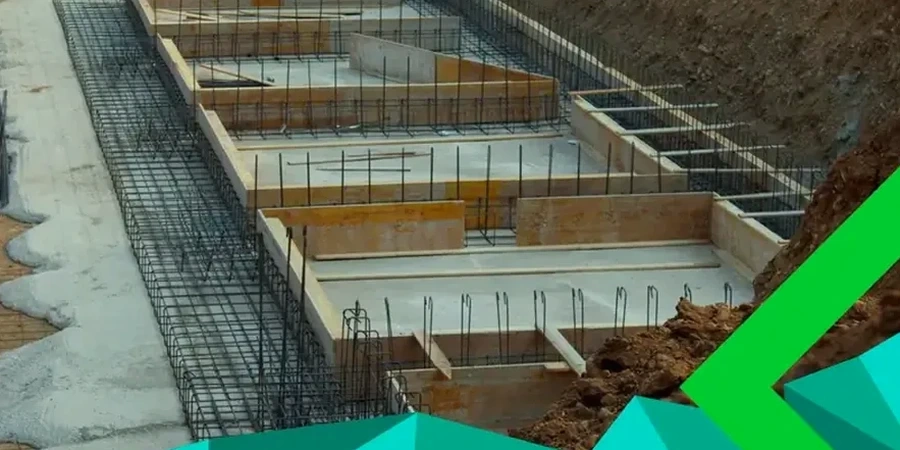
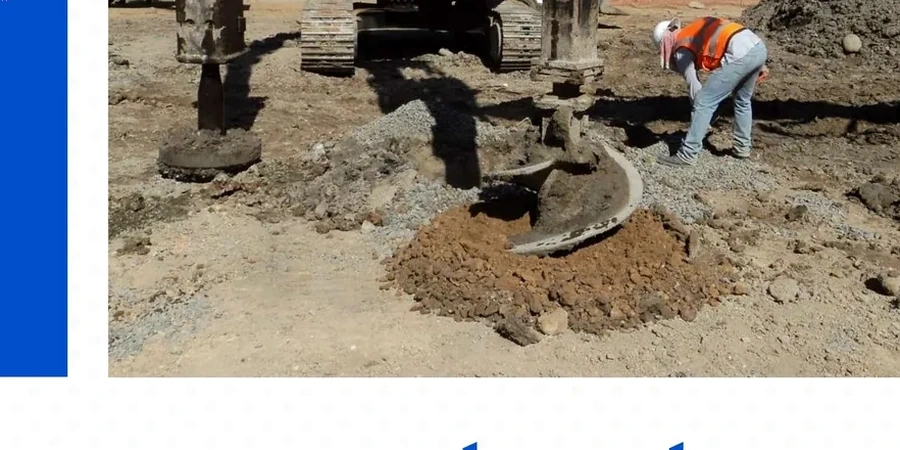
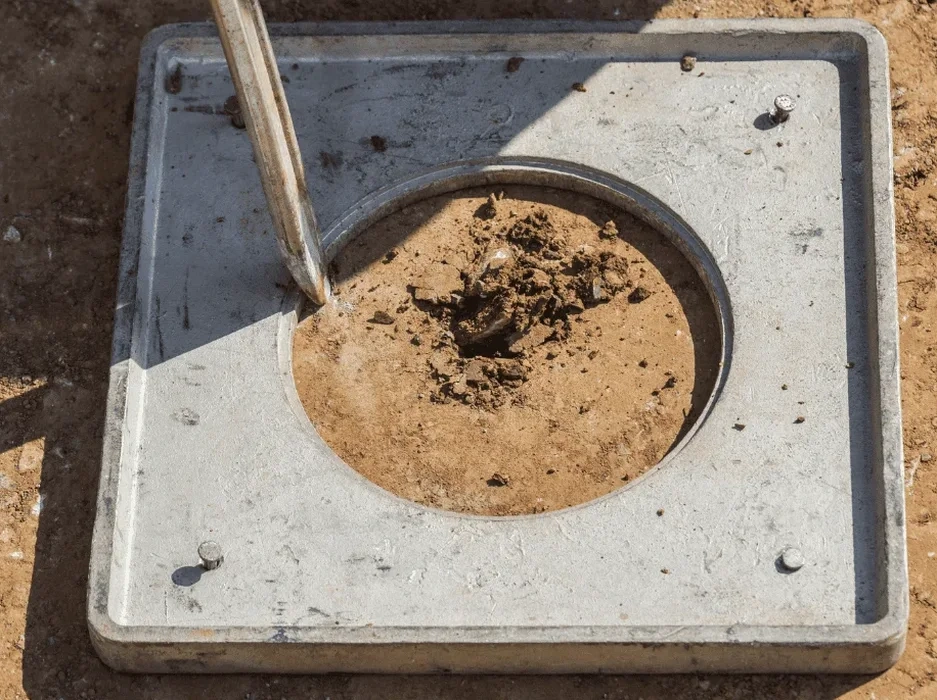
Last spring we reviewed a commercial site off Rue Notre-Dame where the client had already poured footings. The concrete was in place, but the bearing stratum was inconsistent—lenses of soft silty clay left from the ancient Champlain Sea intermixed with glacial till. Repentigny sits on these complex post-glacial deposits, and assuming uniform conditions across a 2,000 square meter lot is a gamble you do not want to take. A proper soil mechanics study maps that variability before steel is cut or formwork goes up. We extract undisturbed samples, run the full suite of index and strength tests, and deliver parameters you can plug directly into your structural model—no guesswork, no last-minute redesigns. When the stratigraphy is tricky, we pair the lab program with field investigation like test pits to visually confirm layer boundaries and groundwater depth.

Settlement, not bearing failure, governs most foundations on the Champlain clays found across Repentigny's Lanaudière terraces.
Geotechnical Engineering in Repentigny
Technical reference — Repentigny

Our service areas

Local geology

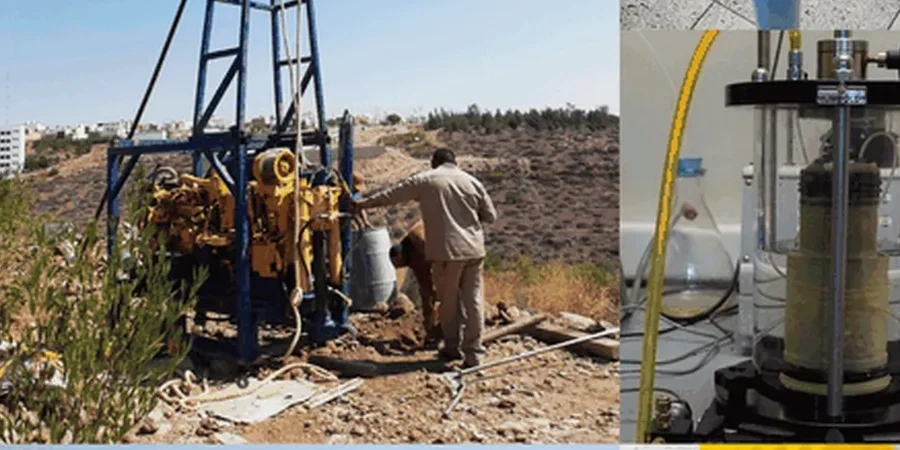
Repentigny's population has passed the 86,000 mark, and with the REM extension reshaping the North Shore, infill projects and mid-rise residential blocks are accelerating. The local geology here is dominated by Champlain Sea clay, sensitive to disturbance and prone to consolidation settlement under load. Our soil mechanics study quantifies that sensitivity: we measure undisturbed shear strength via triaxial compression, run one-dimensional consolidation tests to compute Cc and Cv, and classify fines through Atterberg limits. A single number on a geotech report—like an allowable bearing pressure of 150 kPa—means nothing without the context of settlement analysis. That is why we also run CPT testing on larger parcels, giving us a continuous strength profile that complements the discrete lab results and helps identify thin sand seams that can act as drainage paths and accelerate consolidation.

Relevant standards

CSA A23.3: Design of concrete structures (foundation references), ASTM D4767: Consolidated undrained triaxial compression test for cohesive soils, ASTM D2435: One-dimensional consolidation properties of soils, NBCC 2020: National Building Code of Canada, Part 4 structural design, ASTM D2487: Standard Practice for Classification of Soils for Engineering Purposes

Need a geotechnical assessment?

Reply within 24h.

Email: info@geotechnical-engineering.org

Why choose us

The most expensive mistake we see in Repentigny is treating the upper desiccated crust as a bearing layer while ignoring the soft, normally consolidated clay underneath. A three-story building founded on the crust might show negligible settlement for two years, then begin to tilt as the load transfers deeper. By the time the cracks appear, the repair costs are an order of magnitude higher than the original investigation would have been. A soil mechanics study that includes consolidation testing and settlement prediction under the proposed load eliminates that risk at the design stage. In zones near the L'Assomption River, we also check for organic layers and variable groundwater that can complicate excavation and require dewatering planning before shovels hit the ground.

Technical data

ParameterTypical value
Undrained shear strength (Su)Lab vane and UU triaxial
Preconsolidation pressure (σ'p)1D oedometer test
Compression index (Cc)Consolidation curve analysis
Moisture content and unit weightASTM D2216 and D7263
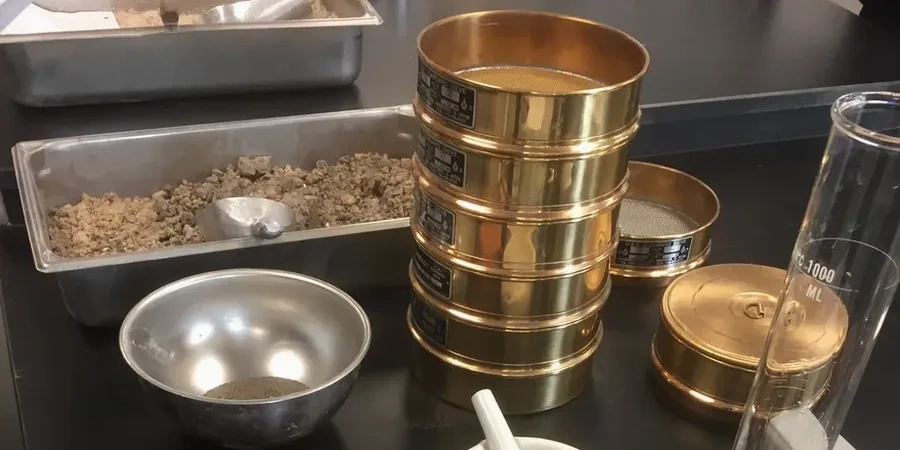
Grain size distributionSieve and hydrometer
Atterberg limits (LL, PL, PI)ASTM D4318
Soil classificationUSCS (Unified System)

Questions and answers

How long does a complete soil mechanics study take for a typical Repentigny residential lot?

Field sampling and logging usually take one day. Laboratory testing runs between 10 and 15 business days, depending on whether consolidation tests are required. The interpretive report with foundation recommendations follows within one week of lab completion, so plan on three to four weeks from mobilization to final deliverable.

What does a soil mechanics study cost for a single-family home project in Repentigny?

For a standard residential investigation including a test pit or borehole, lab index testing, and a bearing capacity report, the cost ranges from CA$4,400 to CA$7,230. The final price depends on the number of samples, the depth of investigation, and whether consolidation or triaxial testing is needed.

Do you test for pyrite or swelling potential in Repentigny soils?

Yes. While the Champlain Sea clays are not typically pyritic, we can include swell-consolidation testing and sulfate content analysis when the site is near known fill areas or shale bedrock. We adapt the lab program to the specific geological risk flagged during the initial site reconnaissance.

Location and service area

We serve projects in Repentigny and surrounding areas.

View larger map