GEOTECHNICAL ENGINEERING
REPENTIGNY
HomeLaboratoryGrain size analysis (sieve + hydrometer)

Grain Size Analysis (Sieve + Hydrometer) in Repentigny: A Practical Guide for Site Characterization

Technical studies that support your project.

LEARN MORE

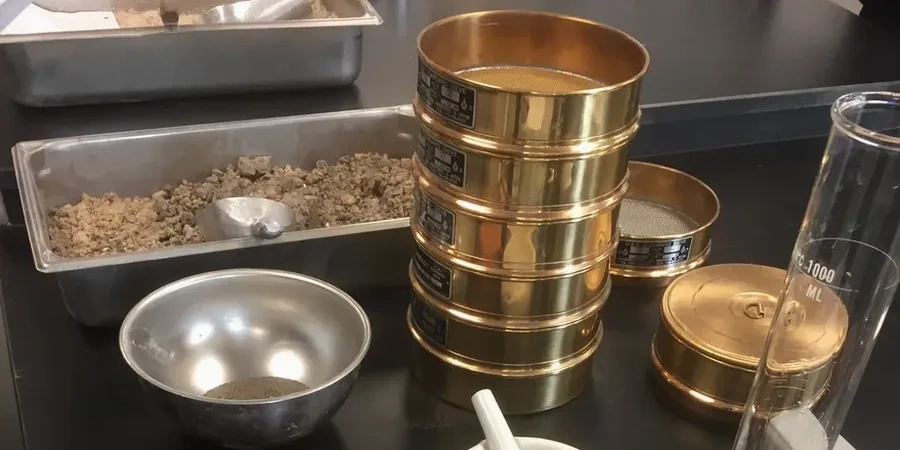
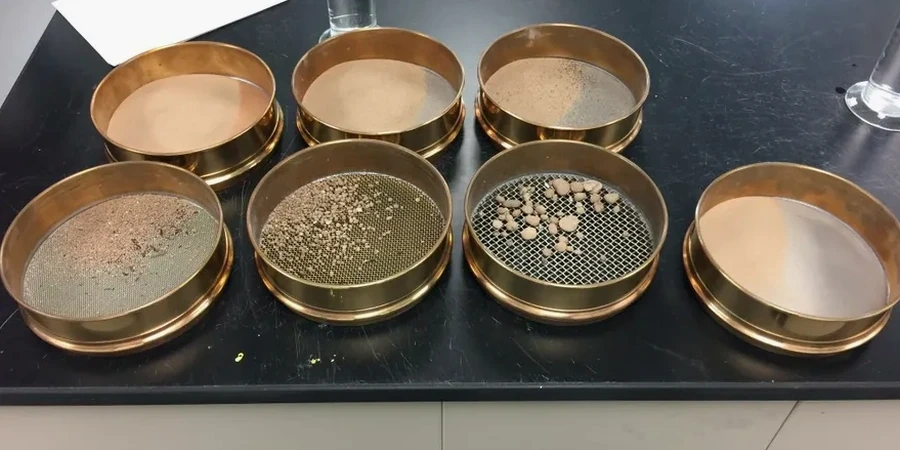
A common mistake in Repentigny’s residential subdivisions is assuming that all native soils are free-draining sand simply because they look granular at the surface. The Lanaudière region—where the city sits at roughly 45.73°N along the Assomption River—contains extensive lenses of silty clay deposited by the post-glacial Champlain Sea. When a contractor skips the hydrometer portion of a grain size test, they miss the 10-15% fines fraction that controls frost susceptibility under CSA A23.3 and the National Building Code. Our grain size analysis combines ASTM D6913 mechanical sieving for the coarse fraction with ASTM D7928 hydrometer sedimentation for the silt and clay fraction. The result is a complete particle-size distribution curve that geotechnical engineers in Repentigny use to verify drainage blanket specifications, predict heave potential, and select filter-compatible materials. For projects near the riverbanks, where stratigraphy can shift from clean sand to varved clay within a few meters, we often pair the grain size curve with an in-situ permeability test to confirm field hydraulic conductivity against lab-derived estimates.

A 3% difference in fines content can shift a soil from 'non-frost-susceptible' to 'highly frost-susceptible' under Quebec's grading criteria—hydrometer data is not optional in Repentigny.
Our service areas

Our approach and scope

Repentigny’s population has surpassed 86,000, driving steady demand for both single-family foundations and multi-storey commercial buildings on the north shore. Our laboratory processes samples from the city’s four main geological units: modern alluvium along L'Assomption, Champlain Sea silty clays, stony glacial till, and occasional bedrock of the Lorraine Group. The combined sieve-and-hydrometer analysis reports D10, D30, D60, and the coefficients of uniformity and curvature—values that feed directly into filter design, seepage analysis, and frost-protection layer grading. A typical Repentigny silty sand might yield a uniformity coefficient Cu above 6 but a fines content of 12%, putting it right on the boundary between frost-susceptible and non-susceptible according to the Ministry of Transportation of Quebec’s classification. When the fines content exceeds 15%, the hydrometer curve becomes essential; it separates active clay minerals from inert rock flour, information that a triaxial test later uses to anticipate drained versus undrained shear response. Samples are oven-dried, washed over a No. 200 sieve, and dispersed with sodium hexametaphosphate before hydrometer readings are taken at 0.5, 1, 2, 5, 15, 30, 60, 250, and 1440 minutes.
Grain Size Analysis (Sieve + Hydrometer) in Repentigny: A Practical Guide for Site Characterization
Technical reference — Repentigny

Local geotechnical context

Eastern Canada’s freeze-thaw cycles—Repentigny records roughly 110 freeze-thaw days per year—create a geotechnical hazard that starts at the particle scale. Silts with D10 between 0.02 and 0.07 mm are notorious for ice lensing; they wick capillary water upward while retaining just enough permeability to sustain continuous ice growth. A grain size analysis that stops at the No. 200 sieve gives zero information about the silt-clay split, leaving the frost-protection design blind to the most critical variable. The consequence shows up as differential heave beneath lightly loaded slabs and road subgrades after the first winter. Our hydrometer protocol captures the full fine-grained tail of the distribution, enabling the engineer to classify the soil according to the Ministry of Transportation of Quebec’s frost-susceptibility groups and specify the correct granular cover thickness under the NBCC. In Repentigny’s new developments east of Autoroute 40, where clayey silts of the Champlain Sea dominate, the grain size curve also flags potential consolidation settlement—material with more than 40% clay fraction rarely drains quickly enough for short-term loading assumptions.

Need a geotechnical assessment?

Reply within 24h.

Email: info@geotechnical-engineering.org

Relevant standards

ASTM D6913, ASTM D7928, CSA A23.3, MTQ frost-susceptibility classification

Technical data

ParameterTypical value
Test standardsASTM D6913 / D7928 (sieve + hydrometer)
Sample mass received500–2000 g for fine-grained soils
Sieve series75 mm to No. 200 (75 µm)
Hydrometer type152H, readings at 0.5–1440 min
DispersantSodium hexametaphosphate (40 g/L)
Reported coefficientsCu, Cc, D10, D30, D60, % gravel/sand/silt/clay
Frost classificationMTQ frost-susceptibility category

Questions and answers

How much does a complete grain size analysis (sieve + hydrometer) cost in Repentigny?

The combined test typically runs between CA$140 and CA$230 per sample, depending on whether the sample needs pre-treatment to remove organic matter or carbonates. The price includes oven-drying, mechanical sieving through the full stack, washing over the No. 200 sieve, and the full hydrometer sedimentation series with a report that plots percent finer against grain diameter on a semi-log scale. Turnaround is generally five to seven business days from sample reception.

Why can't we just do a sieve analysis and skip the hydrometer?

The sieve analysis stops at the No. 200 sieve (75 µm) and tells you the total percent passing—but not whether that material is silt or clay. In Repentigny’s Champlain Sea deposits, the silt-versus-clay split controls frost heave, drainage, and compressibility. The hydrometer quantifies particle sizes down to about 1 µm, giving the engineer the D10 and the clay fraction needed for frost classification and settlement estimates.

What sample mass do you need for the complete grain size test?

For fine-grained Repentigny soils we request at least 500 grams of undisturbed or bagged material; coarser granular samples require 2000 grams or more to ensure a representative split. Samples should be sealed immediately after collection in the field to preserve natural moisture content, which we record before oven-drying.

Do you provide the uniformity and curvature coefficients with the report?

Yes. Every grain size report includes D10, D30, D60, the coefficient of uniformity Cu (D60/D10), and the coefficient of curvature Cc (D30²/(D10×D60)). These values are essential for filter design, assessing well-graded versus poorly-graded materials, and evaluating internal stability of granular layers beneath Repentigny foundations.

Location and service area

We serve projects in Repentigny and surrounding areas.

View larger map